
Armadillo Damage Guide
Armadillo
Damage
Armadillos cause serious property damage fast. Identify what they're destroying, understand why, and find out how we stop it — before the repair bills get worse.
Call (615) 613-5992Why Armadillo Damage Gets Worse Fast
A single armadillo can dig dozens of holes in one night. Left unchecked, they return to the same property night after night, expanding burrows, destroying root systems, and undermining structures. The damage compounds — what starts as a few holes in the lawn becomes a foundation problem, a dead shrub bed, or a collapsed deck footing.
Understanding where and how armadillos damage property helps you act before the problem escalates. Below is every damage type we deal with regularly, what's actually happening, and how we fix it.
Armadillo Damage by Location
Click any damage type to understand what's happening and how we address it
Damage in Mulch Beds
ModerateWhat's Happening
Mulch beds are prime armadillo foraging territory. They dig 3–5 inch conical holes throughout the bed hunting for grubs, beetles, and earthworms living in the moist organic material. A single night's foraging can leave a mulch bed looking like it was hit with a pitchfork.
Why It Matters
Repeated digging uproots annuals, exposes perennial root systems to freeze damage, and destroys the weed-suppressing layer you paid to install. Over time, the constant disturbance kills established plantings.
Our Fix
We trap along the mulch bed perimeter using funnel sets. After removal, we advise on mulch depth and material changes that reduce attractiveness, and can install wire mesh underlayment to physically block future digging.
Damage in the Yard
ModerateWhat's Happening
Open lawn damage is the most common armadillo complaint — scattered conical holes 3–5 inches deep and wide across the grass. Armadillos follow grub populations and can work across a large yard in a single night, leaving dozens of holes.
Why It Matters
Beyond the eyesore, the holes create ankle-twisting hazards, damage mower blades, and kill grass in the disturbed areas. A heavy infestation can leave a lawn looking like a minefield within a week.
Our Fix
We read the dig pattern to identify travel corridors and active foraging zones, then deploy heavy-duty cage traps or funnel sets along those routes. We also provide grub treatment referrals to reduce the food source driving the activity.
Foundation Damage
SevereWhat's Happening
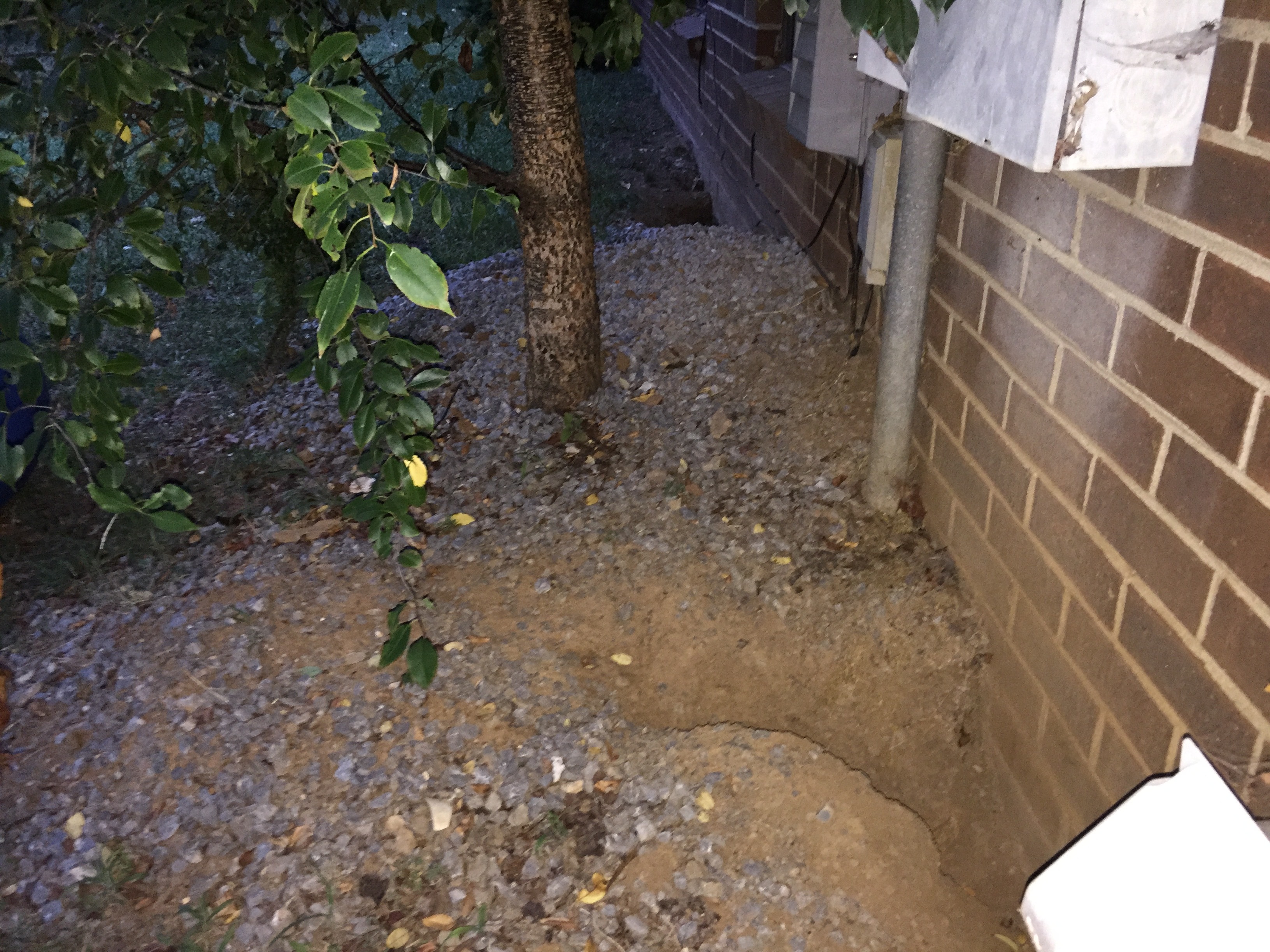
Foundation burrows are the most serious armadillo damage. A single burrow system can extend 15 feet underground and run directly under footings, slabs, and piers. The tunnels create voids that allow soil to shift and settle unevenly.
Why It Matters
Undermined footings crack. Slabs settle and fracture. Pier foundations lose bearing capacity. What starts as an armadillo burrow can become a $10,000–$50,000 structural repair. This is not a wait-and-see situation.
Our Fix
Nose cone traps set directly at the burrow entrance achieve near-100% catch rates. After capture, we fill and compact the entire tunnel system, then install buried hardware cloth barriers along the foundation line to permanently block re-entry.
Damage Under Decks
SevereWhat's Happening
The dark, sheltered void under a deck is ideal armadillo habitat. Once an armadillo establishes a burrow under a deck, it returns nightly and the burrow expands. Multiple animals may use the same den. Digging directly undermines deck footings and post bases.
Why It Matters
Deck post bases sitting in voids lose lateral stability. Footings that lose soil contact can shift, causing the deck to rack or lean. Deck repairs from undermined footings run $2,000–$15,000 depending on severity.
Our Fix
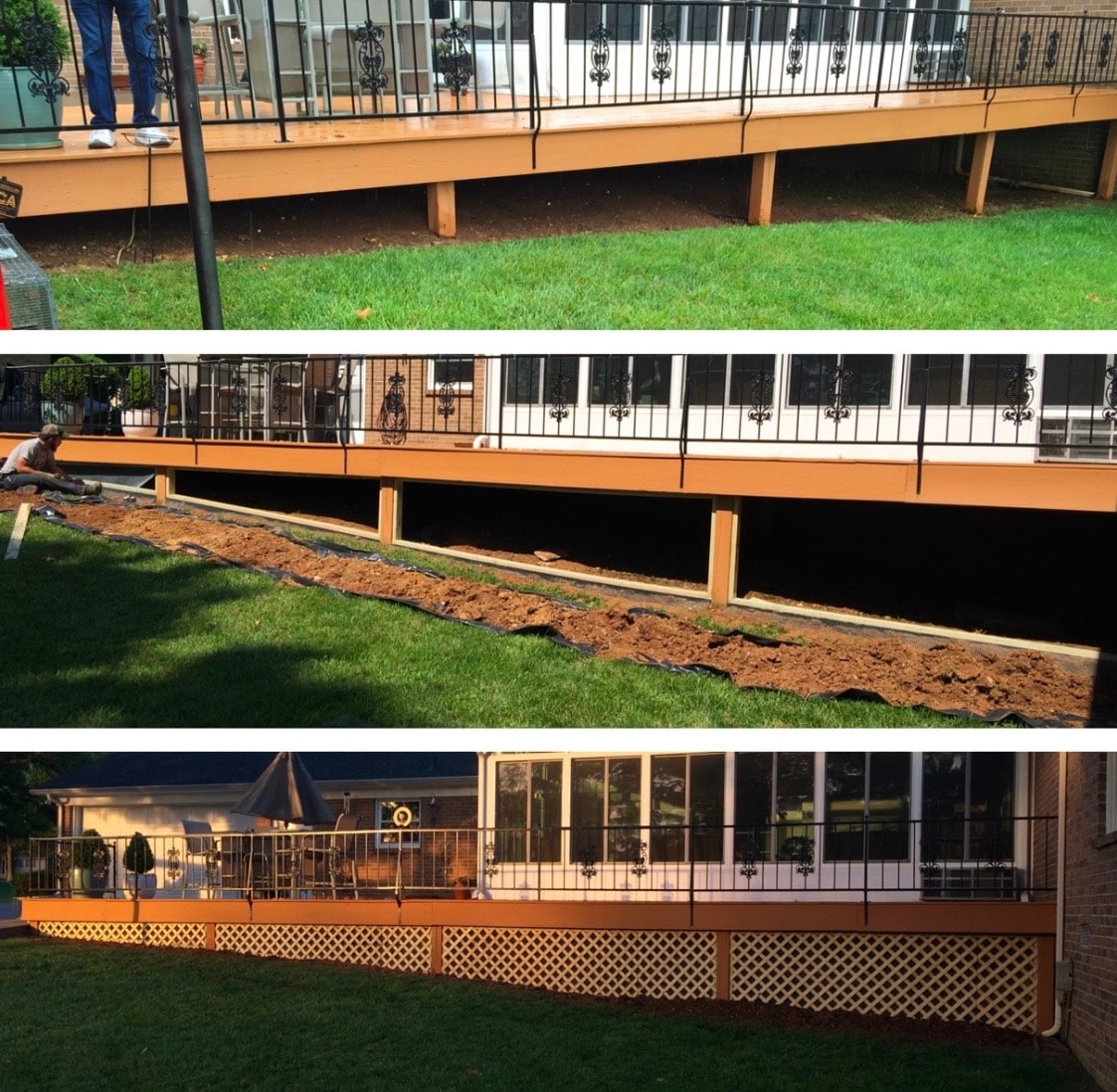
We use nose cone traps at active burrow openings and cage traps along deck edges. After removal, we install a buried L-footer exclusion barrier around the full deck perimeter — hardware cloth that goes 12 inches down and angles outward to defeat digging.
Damage Under Sheds
ModerateWhat's Happening
Shed foundations, skids, and concrete pads create perfect armadillo cover. Burrows under sheds can be extensive — sometimes running the full length of the structure. The confined space makes DIY trapping nearly impossible.
Why It Matters
Shed skids lose ground contact and the structure becomes unlevel. Concrete pads develop voids beneath them and eventually crack. Stored items on an unlevel floor shift and fall. The burrow also attracts other wildlife once the armadillo is gone.
Our Fix
We access burrow entrances around the shed perimeter, deploy nose cone traps, and after capture install a continuous buried exclusion barrier. Concrete block or gravel skirt options are available for permanent, low-maintenance protection.
Damage Under Fences
LowWhat's Happening
Armadillos routinely dig under fences to access yards. They follow fence lines as travel corridors, probing for soft soil gaps. Once they find a way in, they use the same entry point repeatedly and the hole grows with each pass.
Why It Matters
Beyond allowing armadillo access, fence-line holes let other animals in and pets out. Undermined fence posts lose stability. In privacy fences, the gap at the base becomes a visible eyesore and a security concern.
Our Fix
Funnel trap sets along the fence line are highly effective — armadillos naturally follow the barrier edge straight into the trap. After removal, we install buried hardware cloth along the fence line to permanently close entry points.
Digging Up Plants & Flowers
ModerateWhat's Happening
Armadillos dig through flower beds, vegetable gardens, and ornamental plantings hunting for insects in the root zone. They don't eat the plants — the damage is purely collateral from foraging. But the digging uproots plants, exposes roots, and destroys the soil structure around them.
Why It Matters
Uprooted annuals die immediately. Perennials with exposed roots are vulnerable to drought and freeze. Established ornamentals that took years to grow can be killed in a single night of heavy foraging. Vegetable gardens can be wiped out mid-season.
Our Fix
We trap along the edges of affected beds using funnel sets with guide wings. After removal, we can install wire mesh barriers just below the soil surface around valuable plantings to protect root zones from future digging.
Digging Up Trees & Shrubs
ModerateWhat's Happening
Dense shrub beds and the root zones of established trees are common armadillo foraging sites. They dig through root systems hunting for grubs and beetle larvae that live in the organic matter around roots. Large shrubs and small trees can have their entire root zone excavated.
Why It Matters
A shrub with its root zone repeatedly disturbed loses its ability to take up water and nutrients. Established shrubs that took 5–10 years to mature can be killed within a season of armadillo activity. Tree root damage creates long-term decline even if the tree survives.
Our Fix
We set traps along shrub bed edges and use guide wings to funnel armadillos toward the trap. For high-value trees and shrubs, we install wire mesh root zone barriers after removal to protect the investment going forward.
Damage by the AC Unit
ModerateWhat's Happening
The warm, sheltered space around HVAC condenser units is a common armadillo denning spot. They dig in the gravel pad and soil around the unit, and may burrow under the concrete pad itself. Digging near refrigerant lines and electrical conduit creates real equipment risk.
Why It Matters
A refrigerant line nicked by digging means an expensive HVAC repair and a hot house in summer. Electrical conduit damage is a fire hazard. A condenser pad that loses soil support can tilt, stressing the refrigerant lines and reducing efficiency.
Our Fix
We set traps in the confined space around the unit using appropriately sized cage traps. After removal, we install a buried exclusion barrier around the full pad perimeter — keeping the area accessible for HVAC service while permanently blocking armadillo re-entry.
Damage in the Crawlspace
SevereWhat's Happening
Armadillos that burrow under a home's foundation can access the crawlspace through gaps in the foundation vent screens or by digging under the foundation wall. Once inside, they den in the insulation, damage vapor barriers, and create extensive burrow systems in the confined space.
Why It Matters
Damaged vapor barriers allow moisture into the crawlspace, leading to mold, wood rot, and structural decay. Insulation torn down for denning loses its R-value. Burrows under interior piers compromise the home's structural support. Crawlspace remediation after armadillo damage is expensive.
Our Fix
We identify all entry points, set traps at each one, and seal entries after capture. Crawlspace exclusion includes foundation vent screen repair or replacement, buried perimeter barriers, and inspection of the vapor barrier and insulation for damage.
Dead Armadillo in the Yard
LowWhat's Happening
A dead armadillo on your property needs prompt removal. Armadillos can carry leprosy (Mycobacterium leprae) — one of the few animals that can transmit it to humans. They also carry salmonella and other pathogens. A carcass attracts flies, maggots, and scavengers within hours.
Why It Matters
Direct contact with a dead armadillo carries disease risk. The carcass odor attracts other wildlife — coyotes, raccoons, and vultures — to your yard. Decomposition in a burrow or under a structure creates a persistent odor problem that's difficult to remediate.
Our Fix
We provide safe, properly equipped dead animal removal with full PPE. The carcass is bagged and disposed of per Tennessee wildlife regulations. We also inspect for an active burrow nearby — a dead armadillo often means others are still active on the property.
Foundation & Crawlspace Damage: Don't Wait
Foundation burrows and crawlspace intrusions are the two damage types that escalate fastest. A burrow that's been active for 30 days can already be undermining footings. If you're seeing holes near your foundation, slab, piers, or crawlspace vents — call us today. Same-day assessment available.
Call (615) 613-5992 — Same-Day AssessmentSeeing Armadillo Damage on Your Property?
Don't wait for a minor nuisance to become a structural problem. Call us for a free site assessment — we'll identify what's active, what's at risk, and get traps set the same day.
(615) 555-0100